Cinema often entertains, occasionally provokes — but rarely does it move beyond the screen. Assi did just that, quietly shaping conversations far outside the theatre, writes RAO NARENDER YADAV
For decades, cinema has been debated, discussed and deliberated as spectacle, as commerce, as art — and occasionally, as conscience. In panel discussions, research papers, and open forums, its role has oscillated between being a mirror to society and a commercial enterprise. Yet, not so often, a film steps beyond this binary and asks a more unsettling question: what happens after the credits roll?
When Anubhav Sinha’s Assi, starring Taapsee Pannu and Kani Kusruti, released across India on February 20, it did not set the box office ablaze. Within weeks, it quietly slipped out of most cinema halls, gradually overshadowed by the churn of commercial biggies like Dhurandhar. While it quietly walked out of the cinema halls, but during this process it did something far more enduring—it travelled beyond the theatre.
Filmmakers like Anubhav Sinha have built a reputation on pushing cinema into uncomfortable territories – forcing audiences to confront realities they might otherwise avoid. Naturally, expectations from such storytellers are not limited to box office numbers, but extend to their ability to provoke thought, spark dialogue, and perhaps even unsettle silence.
During the Last one month, in online spaces, in university corridors, and increasingly in professional arenas, Assi has begun to ignite conversations that are often deferred, diluted, or dismissed. Conversations about justice…about accountability… about the lived realities of survivors navigating systems that are meant to protect them, but often fail to do so.
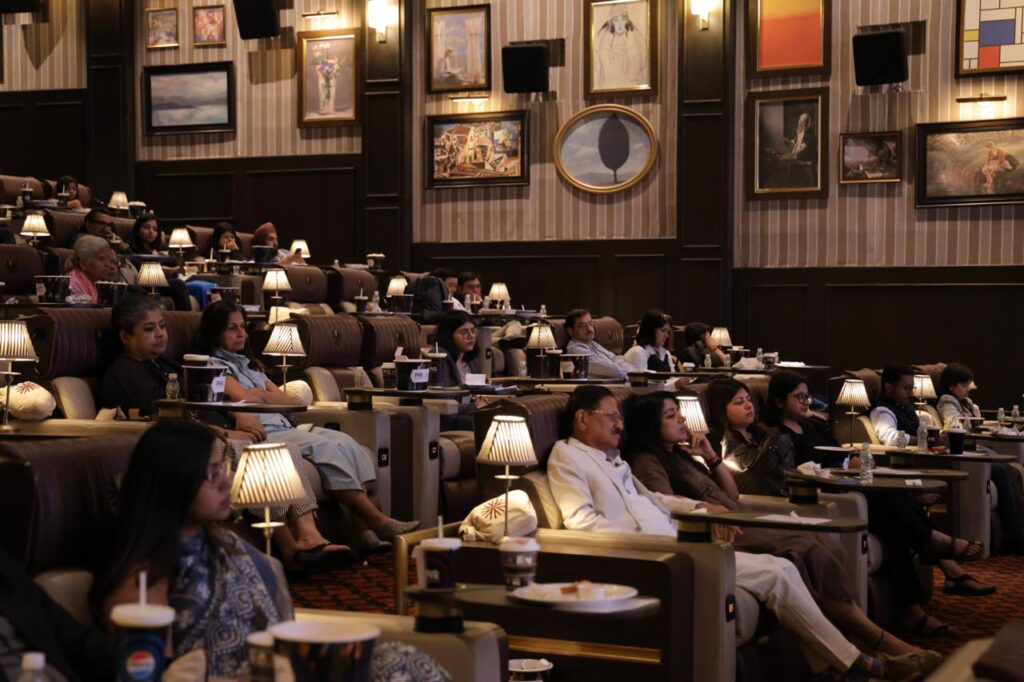
Nowhere was this more evident recently, than in a remarkable gathering where over a hundred lawyers, advocates, and civil society practitioners came together—not merely to watch the film, but to engage with it at the PVR Director’s Cut, Vasant Kunj on March 27.

The discussion that followed — The Law, the Courtroom and the Survivor: Re-imagining Justice — brought together voices that operate at the very heart of India’s legal and rights framework. Justice Gita Mittal, former Chief Justice of the High Court of Jammu & Kashmir, and Vrinda Grover, Advocate at the Supreme Court, moderated by Sukanya Hazarika, Director at Khaitan & Co. moved the conversation from screen to system.
Drawing from years of experience, the panel did not dwell on the film as a standalone narrative. Instead, it used it as a lens to examine the persistent gap between legal intent and lived experience. The discussions underscored a pressing need: justice systems that are not only procedurally sound, but also empathetic, accessible, and survivor-centric. What emerged was not just critique, but a call to re-imagine.
This is where cinema, at its most powerful, finds its true purpose. Not in the applause that follows a climactic scene, but in the uncomfortable silence that lingers after. Sharing a similar perspective, Nayana Bijli, Founder Sandhuro Rani Bijli Trust, reflected on the unique ability of cinema to humanise complex issues. She noted that films like Assi have the power to open hearts and initiate conversations that might otherwise remain unspoken. Platforms such as these, she emphasised, enable collective reflection—encouraging audiences not only to question existing systems but also to move towards more compassionate and responsive approaches to justice.

Reflecting on the significance of such engagements, Sanjeev Kapoor, Senior Partner at Khaitan & Co noted that initiatives like these help move conversations beyond the abstractions of legal theory and into the realm of lived realities. He emphasised that they compel stakeholders to look past procedures and engage with how systems are actually experienced on the ground.
For everyone, the screening became a starting point, not an end.